
A broken garage door spring is the single most common cause of a door that suddenly stops working — and one of the most alarming sounds a homeowner can hear from the garage. If you were in the house when it happened, you likely heard a loud bang, possibly followed by the door refusing to open or hanging at an angle. If you arrived home to find your car trapped inside, the spring may have failed silently overnight.
Either way, a broken spring in Centre Wellington means you need professional help quickly and safely. This guide explains exactly what garage door springs do, why they fail, the difference between the two main spring types, why this is emphatically not a DIY repair, and what to expect when Garage Doors Elora comes to fix it.
What Garage Door Springs Actually Do
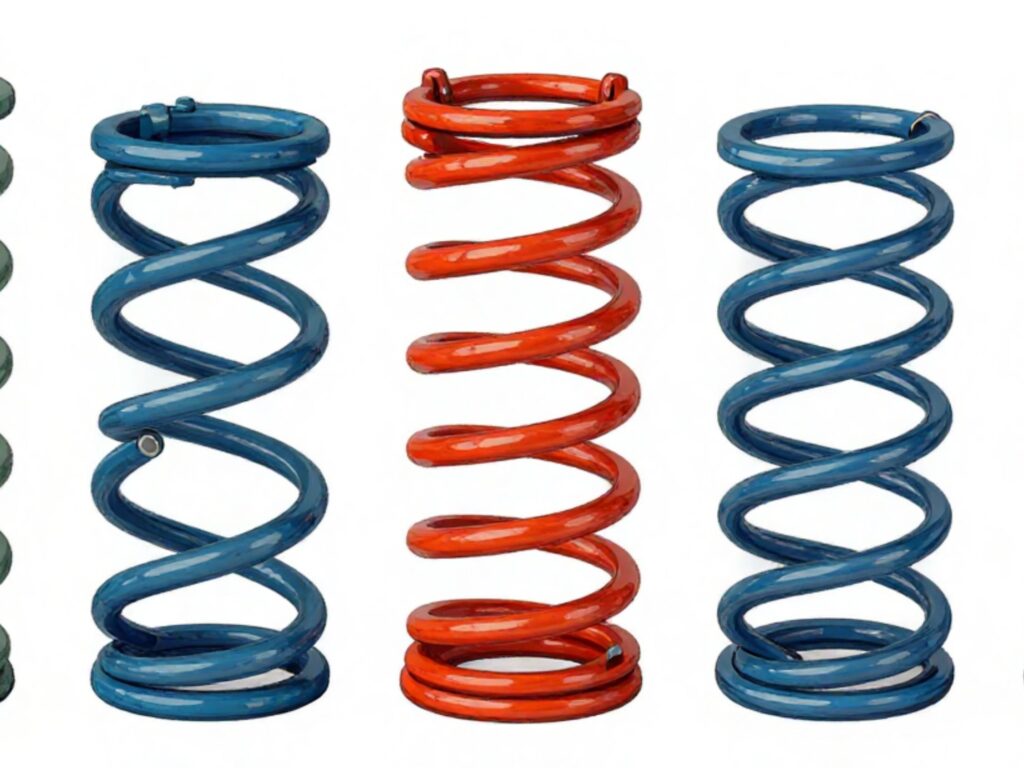
Your garage door is significantly heavier than it looks. A standard single residential door weighs between 100 and 150 pounds; a double door can exceed 200 pounds. Without springs, your opener motor would need to lift that full weight with every operation — which it is not designed to do. Springs do the counterbalancing work: they store mechanical energy as the door closes and release it to assist the door as it opens, so the opener only manages a fraction of the actual door weight.
When a spring fails, that counterbalancing function disappears. The door becomes deadweight. If the failure happens while the door is closed, it may be physically impossible to open — even manually — without risking injury. If it happens while the door is in motion, the door can drop suddenly and without warning.
Torsion Springs vs Extension Springs — Which Does Your Door Use?
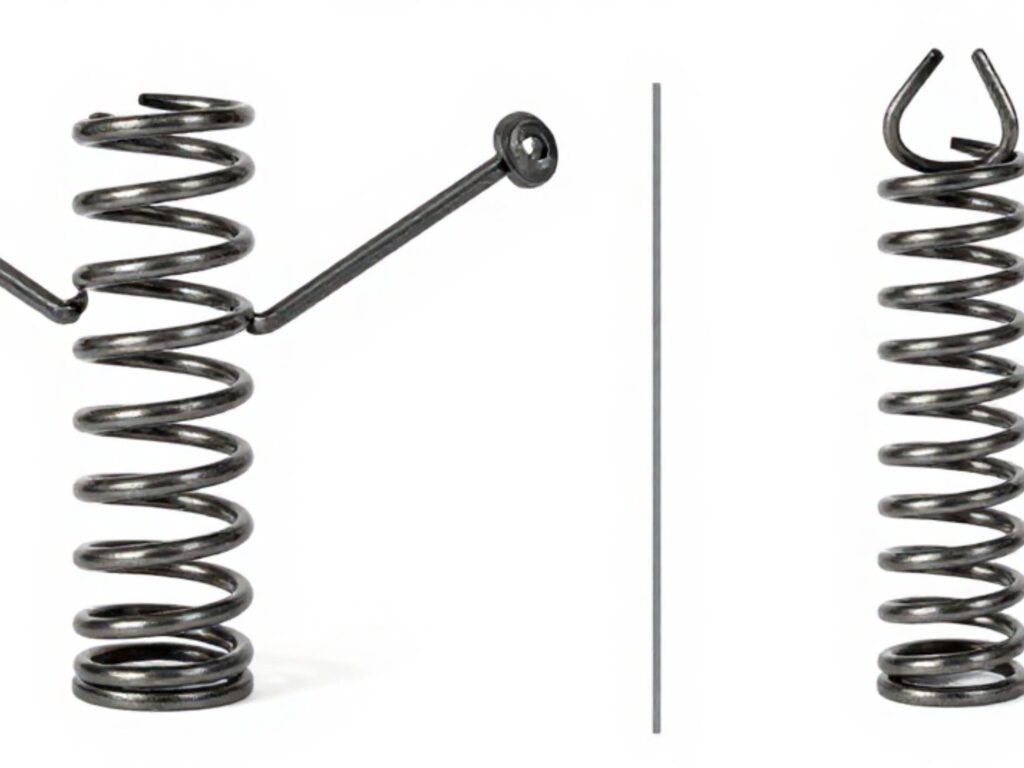
Torsion springs:
Torsion springs are the most common type in modern residential and commercial garage doors. They are mounted horizontally above the door opening on a metal shaft, and they work by twisting (torquing) along their axis as the door opens and closes. Most Centre Wellington homes built or renovated in the last 20 to 30 years will have torsion springs.
When a torsion spring breaks, it usually does so with a sharp, loud bang — often described as sounding like a gunshot or a firecracker. The break is visible as a gap or separation in the coil. A door with a broken torsion spring typically will not open at all, even with the opener running.
Extension springs:
Extension springs run along the horizontal tracks on either side of the door and stretch (extend) as the door closes, storing energy that assists the opening. They are more common in older homes and in low-headroom applications where there is not enough clearance for a torsion system.
Extension spring failures are sometimes less dramatic than torsion failures — the spring may stretch beyond its usable range gradually rather than snapping suddenly. However, an extension spring failure can also cause one side of the door to drop, creating an off-track situation and a significant safety hazard.
Why Broken Springs Are So Common in Ontario’s Climate
Springs are rated for a number of cycles — one cycle being one full open-and-close operation. Standard residential springs are typically rated for 10,000 cycles; high-cycle springs for 25,000 or more. A family that opens and closes the garage door four times daily will complete roughly 1,460 cycles per year — meaning standard springs reach end of life in approximately 7 years under normal use.
In Centre Wellington, several factors accelerate spring wear beyond the standard cycle calculation:
- Cold-induced brittleness: Steel becomes more brittle at low temperatures. Torsion springs that operate through Ontario winters — particularly during extreme cold snaps — experience stress that would not occur in a milder climate. A spring near the end of its cycle life is significantly more likely to fail during a cold snap than on a mild day
- Ice-fighting stress: When a door freezes to its bottom seal, the opener and spring system bear the load of fighting that bond. Even a brief moment of forcing an iced-up door before it releases can create a spike of stress that exceeds what a fatigued spring can tolerate
- Lubrication failure in cold weather: Springs that have not been lubricated before winter lose the protective film that reduces friction between coil winds. Metal-on-metal contact under cold-induced stress accelerates fatigue
- Temperature cycling: Dozens of freeze-thaw cycles each winter expand and contract the spring metal repeatedly, contributing to micro-fatigue that compounds with cycle wear
This is why broken spring calls peak in Ontario in early spring — not because springs fail more often in spring, but because winter’s accumulated stress brings springs that were borderline to their breaking point, and the first sustained use of the season tips them over.
The Warning Signs Before a Spring Breaks
Springs rarely fail completely without showing some warning signs first. If you know what to look for, you can often catch a spring approaching failure before it becomes an emergency:
- The door feels noticeably heavier when you manually lift it — the spring is losing tension and no longer fully counterbalancing the door weight
- The door closes faster than it used to — a spring with degraded tension allows the door to drop more quickly than it should
- The door wobbles or tilts to one side during operation — uneven tension between two springs (or a partially failing single spring) causes asymmetric movement
- A visible gap is beginning to form between coil winds — this is an early indicator of a spring under excessive stress
- Squeaking, grinding, or unusual sounds during operation that were not present before — metal fatigue often produces noise before visible failure
- The opener is straining — if the motor sounds like it is working harder than usual, the spring may no longer be providing adequate counterbalance
If your door is showing any of these signs, scheduling a garage door spring inspection and repair in Centre Wellington before the spring fails completely is far preferable to dealing with a sudden failure on a cold morning with your car trapped inside.
Why Broken Spring Repair Is Never a DIY Job
Torsion springs are under extreme mechanical tension — a fully wound torsion spring stores enough energy to cause serious injury if it releases uncontrollably. The tools required to safely remove and install a torsion spring — winding bars, a proper vice system, and the knowledge to wind the spring to exactly the right tension — are not standard household equipment.
Every year, homeowners across North America are seriously injured attempting to replace garage door springs without proper training. The risks include:
- The spring releasing suddenly during winding or unwinding, striking the technician with enough force to cause fractures or worse
- An incorrectly tensioned spring causing the door to drop uncontrollably during the first operation
- Installing the wrong spring size, which either fails prematurely or overtensions the hardware
- Extension spring failures that cause the spring body to whip violently if not fitted with safety cables
This is one of the clearest cases in home maintenance where the DIY approach is genuinely dangerous. The cost of professional spring replacement is modest relative to the risk of attempting it yourself. Please call a technician.
What to Do While Waiting for the Technician
Once you have identified a broken spring, here is how to manage safely until the repair team arrives:
- Do not attempt to open the door with the electric opener — running the motor against a door without spring counterbalance can burn out the motor and cause additional damage
- Do not attempt to manually lift the door — a door without spring assistance is extremely heavy and can drop suddenly
- If the car is trapped inside and you need it urgently, contact your technician to explain the urgency — most spring repairs can be completed quickly once on site
- Keep children and pets well away from the garage door area
- If the door is stuck open and security is a concern, contact us immediately — we prioritize open-door emergencies
What Broken Garage Door Spring Repair Involves
When a Garage Doors Elora technician arrives for a spring repair, here is what the process looks like:
- Assessment: The technician confirms the spring failure, checks whether the cables, drums, and other hardware have been damaged by the failure, and assesses whether both springs should be replaced (see below)
- Safe removal: The broken spring is safely unwound using proper winding bars and technique — no shortcuts, no improvised tools
- Correct sizing: The replacement spring is selected to match the door’s weight and height specifications precisely. Using the wrong spring is as problematic as using no spring
- Installation and tensioning: The new spring is installed on the shaft and wound to the correct tension — a calculation based on the door’s weight and the spring’s physical specifications
- Cable and hardware check: We inspect cables, drums, and the opener system for any secondary damage caused by the spring failure
- Balance test and door operation: The door is manually tested for correct balance, then operated through several full cycles to confirm smooth, safe function before we leave
Should You Replace One Spring or Both?
This is the most common question we receive during spring repair calls, and the answer is almost always both — even if only one has visibly broken.
Springs are installed as a matched set on a torsion bar and typically fail at similar times because they have undergone the same number of cycles and the same environmental stress. If one has broken, the other is almost certainly approaching the same point of failure. Replacing only the broken spring leaves you with one new spring and one that is likely to fail within the next season — meaning another service call, another charge, and another morning with a door that will not open.
Replacing both springs at the same time costs less than two separate repair visits, ensures matched tension across the system, and gives you a predictable maintenance window rather than two separate emergency failures. We always recommend dual replacement and explain the reasoning — but the choice is always yours.
High-Cycle Springs — Worth the Upgrade?
Standard springs are rated for approximately 10,000 cycles; high-cycle versions rated for 25,000 or more use heavier gauge wire that dramatically extends service life. For a household opening the door four or more times daily, the upgrade can extend the replacement interval from 7 years to nearly 20 — at a modest cost difference relative to the savings in future service calls. Ask our technician whether a high-cycle upgrade makes sense for your usage pattern.
Emergency Spring Repair in Centre Wellington
A broken spring in the evening, on a weekend, or in the middle of an Ontario cold snap is not a situation that can wait until a convenient appointment slot. Garage Doors Elora offers emergency garage door repair services for exactly these moments — and because our entire team lives in the Elora-Fergus community, we are never far from the properties we serve.
If your spring has broken and you need urgent help, call Garage Doors Elora for emergency spring repair in Centre Wellington at (519) 846-8798. We will get a technician to you as quickly as possible with the parts needed to complete the repair on the first visit.
Preventive Maintenance — Make Spring Failures Less Likely
While no spring lasts forever, proper maintenance significantly extends spring life and gives you advance warning before failure occurs. An annual garage door tune-up — particularly in spring after Ontario’s harsh winters — includes spring inspection, lubrication, tension assessment, and a balance test that identifies a spring losing tension before it fails completely.
Our preventive garage door maintenance and spring inspection service near Elora is the most cost-effective way to extend the life of your springs, catch wear before it becomes a failure, and ensure your door is operating safely through every season.
Considering a New Door Instead?
If your door is more than 20 years old and the spring repair cost approaches the value of the door itself, a replacement may offer better long-term value. Our new garage door installation service in Centre Wellington includes high-cycle spring systems as standard, modern safety hardware, and the full range of CHI, Clopay, and Richards Wilcox styles — installed by the same local team that has been serving this community since 2003.
Book Your Broken Spring Repair in Centre Wellington
A broken spring is one of the most urgent garage door repairs — and one of the safest to leave to a professional. Garage Doors Elora has been repairing springs throughout Centre Wellington since 2003, and our trucks are stocked with the most common spring sizes so most repairs are completed on the first visit.
Call us at (519) 846-8798 or get a free quote online. We are local, we are fully equipped, and we will have your door working safely again as quickly as possible.
Call (519) 846-8798 — Broken Garage Door Spring Repair in Centre Wellington | Garage Doors Elora